
Data analytics has become essential to modern product development, changing how companies create, design, and introduce new products. Data analytics involves systematically analyzing data to identify patterns, relationships, and insights that support business decisions. In product development, this means using data from customer feedback, market research, and sales information to guide every stage of a product’s lifecycle.
When organizations incorporate data analytics into their processes, they can better understand what customers want, improve their operations, and develop products that appeal to their intended market. Data analytics serves purposes beyond basic data processing; it provides a comprehensive view of the market. Companies can use analytics to divide their customers into groups based on shared characteristics, needs, and preferences.
This approach enables more customized products and targeted marketing efforts. Additionally, data analytics allows organizations to monitor how existing products perform continuously, revealing which features customers value most and which ones need improvement or elimination. Consequently, data analytics supports both the initial creation of products and the continuous refinement and updates made throughout a product’s existence.
Utilizing Data Analytics to Identify Market Trends and Customer Needs
Identifying market trends and customer needs is a critical aspect of successful product development, and data analytics plays a pivotal role in this process. By analyzing historical sales data, social media interactions, and customer reviews, companies can gain valuable insights into emerging trends that may influence future product offerings. For example, a fashion retailer might analyze social media hashtags and engagement metrics to identify rising styles or colors that are gaining popularity among consumers.
This information can then be used to inform design decisions and inventory management, ensuring that the retailer stays ahead of the curve. Moreover, data analytics enables organizations to gather direct feedback from customers through surveys and online interactions. By employing sentiment analysis techniques on customer reviews or social media comments, companies can gauge public perception of their products and identify areas for improvement.
For instance, if a significant number of customers express dissatisfaction with a particular feature, this feedback can prompt a reevaluation of that aspect of the product. By continuously monitoring customer sentiment and market trends through data analytics, businesses can remain agile and responsive to changing consumer demands.
Leveraging Data Analytics for Improved Decision Making in Product Development

The decision-making process in product development can be complex and fraught with uncertainty. However, data analytics provides a framework for making informed choices based on empirical evidence rather than intuition alone. By utilizing advanced analytical tools and techniques, organizations can evaluate various scenarios and outcomes before committing to a particular course of action.
For instance, predictive modeling can help teams assess the potential success of a new product concept by analyzing similar products’ historical performance metrics. Additionally, data analytics facilitates cross-functional collaboration by providing a common language for teams involved in product development. Marketing, engineering, and design teams can all access the same data sets to align their strategies and objectives.
This collaborative approach ensures that decisions are made with a comprehensive understanding of market dynamics and customer preferences. For example, if the engineering team identifies a technical limitation in a proposed product feature, marketing can adjust their messaging accordingly to set realistic expectations for customers. This synergy ultimately leads to more cohesive product development efforts.
Implementing Predictive Analytics for Anticipating Customer Preferences
Predictive analytics is a powerful subset of data analytics that focuses on forecasting future trends based on historical data patterns. In product development, this capability is invaluable for anticipating customer preferences before they become apparent in the market. By employing machine learning algorithms and statistical models, organizations can analyze past purchasing behaviors and demographic information to predict which features or products are likely to resonate with consumers in the future.
For instance, an electronics manufacturer might use predictive analytics to determine which specifications are most sought after in upcoming smartphone models. By analyzing data from previous launches—such as sales figures, customer reviews, and competitor offerings—the company can identify key features that drive consumer interest. This foresight allows them to prioritize development efforts on those features that are most likely to attract buyers when the new model is released.
Furthermore, predictive analytics can also assist in inventory management by forecasting demand levels for specific products, enabling companies to optimize their supply chains accordingly.
Using Data Analytics to Enhance Product Testing and Quality Control
| Metric | Description | Impact on Product Development | Example Value |
|---|---|---|---|
| Cycle Time Reduction | Time taken to complete one product development cycle | Shorter cycles enable faster time-to-market and quicker iterations | 20% decrease over 6 months |
| Defect Rate | Number of defects found per development cycle | Lower defect rates improve product quality and reduce rework | 15 defects per 1000 lines of code |
| Customer Feedback Integration | Percentage of customer feedback incorporated into product updates | Higher integration leads to products better aligned with user needs | 75% of feedback addressed |
| Feature Usage Analytics | Data on how frequently new features are used by customers | Helps prioritize features that add most value | 60% of users engage with new feature within first month |
| Development Cost Efficiency | Cost per development cycle relative to output quality | Improved efficiency reduces costs while maintaining quality | 10% cost reduction per cycle |
| Predictive Analytics Accuracy | Accuracy of models predicting project risks and timelines | Better predictions reduce delays and resource misallocation | 85% accuracy in timeline forecasts |
Product testing and quality control are essential components of the product development process, ensuring that offerings meet established standards before reaching consumers. Data analytics enhances these processes by providing insights into performance metrics and potential failure points. By collecting data during testing phases—such as user interactions, error rates, and performance benchmarks—organizations can identify patterns that indicate areas needing improvement.
For example, a software company might analyze user engagement data during beta testing to determine which features are most frequently used or where users encounter difficulties. This analysis can reveal critical insights into user experience that may not be apparent through traditional testing methods alone. By addressing these issues before launch, companies can significantly reduce the likelihood of negative customer feedback post-release.
Additionally, ongoing quality control processes can benefit from data analytics by continuously monitoring product performance in the field and identifying trends that may indicate emerging quality issues.
Incorporating Data Analytics in Agile Product Development Processes
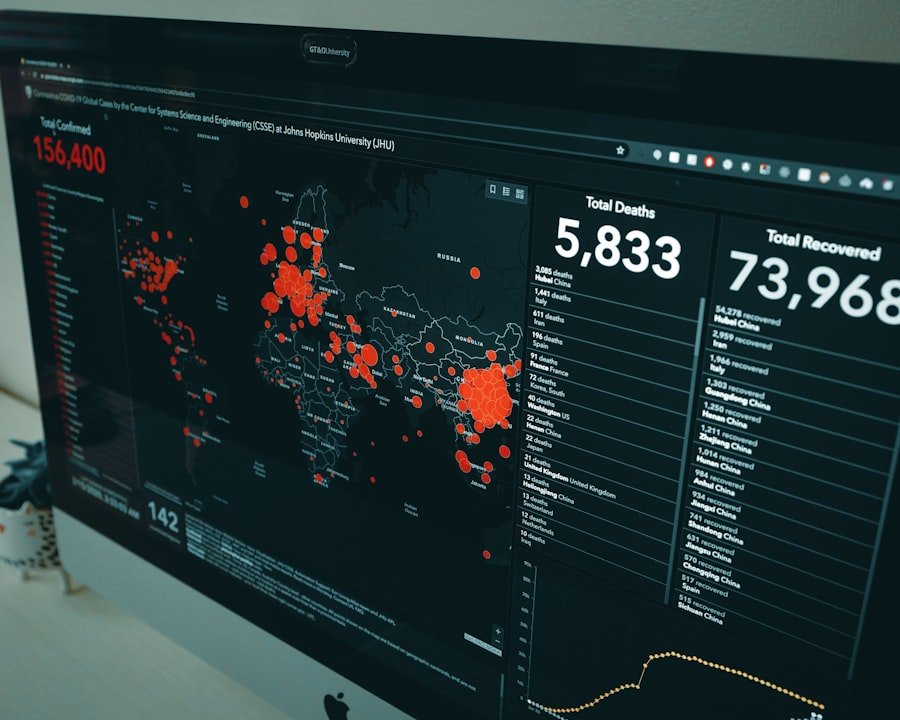
Agile product development emphasizes flexibility and responsiveness to change, making it an ideal framework for integrating data analytics into the development cycle. In an agile environment, teams work in iterative cycles known as sprints, allowing them to adapt quickly based on feedback and new insights. Data analytics plays a crucial role in this process by providing real-time information that informs decision-making at every stage.
For instance, during sprint reviews, teams can analyze user feedback collected from previous iterations to prioritize features for future development cycles. This data-driven approach ensures that the most valuable enhancements are addressed first, aligning product development with customer needs. Additionally, analytics tools can help track team performance metrics—such as velocity and burn-down rates—enabling teams to identify bottlenecks and optimize their workflows continuously.
By embedding data analytics into agile practices, organizations can foster a culture of continuous improvement that drives innovation.
Leveraging Data Analytics for Continuous Improvement and Iterative Development
Continuous improvement is a fundamental principle of effective product development, and data analytics serves as a catalyst for this ongoing process. By systematically collecting and analyzing data throughout the product lifecycle, organizations can identify opportunities for enhancement at every stage—from initial concept through post-launch evaluation. This iterative approach allows teams to refine their products based on real-world performance rather than relying solely on theoretical assumptions.
For example, after launching a new software application, a company might use analytics tools to monitor user engagement metrics over time. By analyzing how users interact with different features—such as frequency of use or drop-off rates—teams can pinpoint areas where enhancements are needed. This feedback loop enables organizations to make informed decisions about future updates or new features based on actual user behavior rather than speculation.
As a result, products evolve in alignment with customer expectations, fostering loyalty and satisfaction.
Overcoming Challenges and Pitfalls in Utilizing Data Analytics for Product Development
While the benefits of data analytics in product development are substantial, organizations must also navigate several challenges and pitfalls associated with its implementation. One significant hurdle is ensuring data quality; inaccurate or incomplete data can lead to misguided conclusions that adversely affect decision-making processes. Companies must invest in robust data governance practices to ensure that the information they rely on is reliable and relevant.
Another challenge lies in fostering a culture that embraces data-driven decision-making across all levels of the organization. Resistance to change can hinder the effective integration of analytics into existing workflows. To overcome this barrier, leadership must champion the use of data analytics by providing training and resources that empower employees to leverage these tools effectively.
Additionally, organizations should establish clear communication channels that facilitate collaboration between teams working with data analytics and those involved in product development. By addressing these challenges head-on, companies can unlock the full potential of data analytics as a transformative force in their product development efforts.
FAQs
What is data analytics in product development?
Data analytics in product development involves collecting, processing, and analyzing data related to product design, testing, and user feedback to make informed decisions that enhance the development process and final product quality.
How can data analytics improve product development cycles?
Data analytics can identify bottlenecks, predict potential issues, optimize resource allocation, and provide insights into customer preferences, enabling faster and more efficient product development cycles.
What types of data are used in product development analytics?
Common data types include user behavior data, market research, product performance metrics, testing results, and feedback from customers and stakeholders.
Which tools are commonly used for data analytics in product development?
Tools such as Python, R, Tableau, Power BI, and specialized product management software are frequently used to analyze and visualize data during product development.
Can data analytics help in reducing product development costs?
Yes, by identifying inefficiencies and predicting potential failures early, data analytics helps reduce waste, avoid costly errors, and streamline processes, ultimately lowering development costs.
Is data analytics applicable to all industries in product development?
Yes, data analytics can be applied across various industries including technology, manufacturing, healthcare, and consumer goods to improve product development outcomes.
What role does customer feedback play in data analytics for product development?
Customer feedback provides valuable qualitative and quantitative data that helps teams understand user needs, preferences, and pain points, guiding product improvements and innovation.
How does predictive analytics influence product development?
Predictive analytics uses historical data and machine learning models to forecast trends, potential risks, and product performance, enabling proactive decision-making during development.
What challenges might companies face when implementing data analytics in product development?
Challenges include data quality issues, lack of skilled personnel, integration with existing systems, and ensuring data privacy and security.
How can companies start integrating data analytics into their product development process?
Companies can begin by identifying key data sources, investing in analytics tools, training staff, and establishing clear objectives for how data will inform development decisions.