
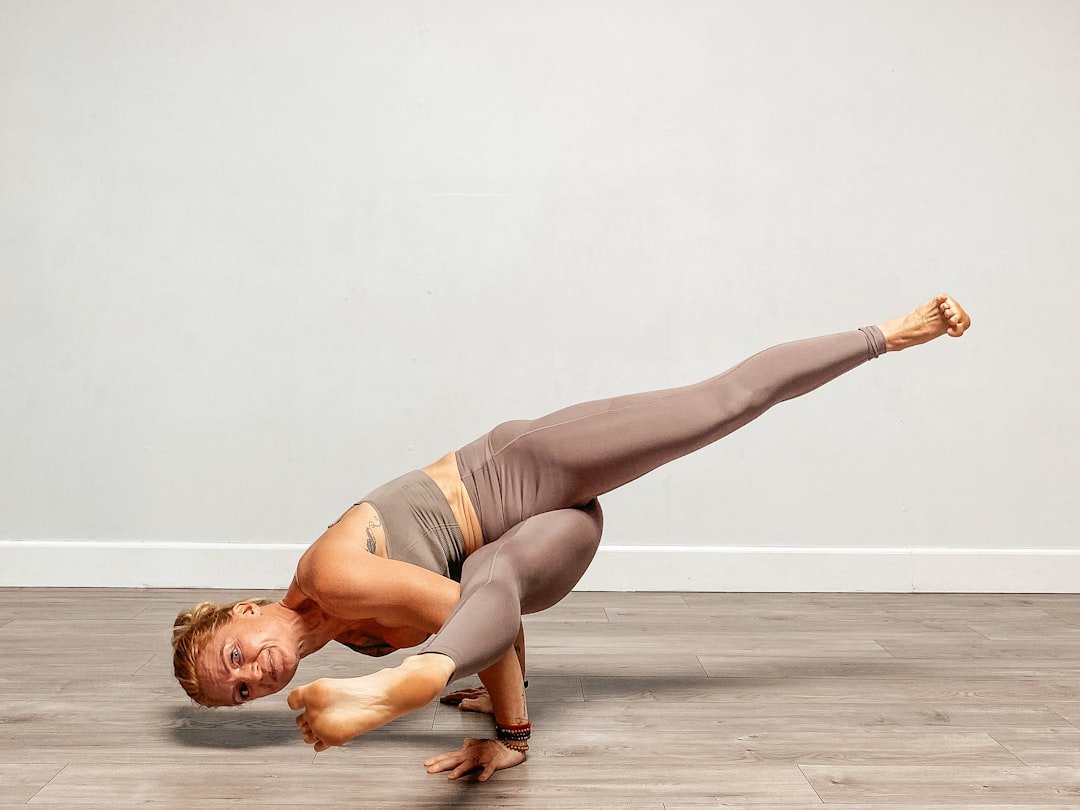
Hip flexibility is essential for overall mobility and functional movement. The hips serve as a central joint connecting the lower limbs to the torso, enabling activities such as walking, running, squatting, and jumping. Greater hip flexibility increases range of motion, which improves athletic performance and reduces injury risk.
For athletes, dancers, and fitness enthusiasts, adequate hip flexibility is necessary for executing movements with precision and control. Additionally, improved hip flexibility supports better posture and spinal alignment, which helps prevent chronic pain and discomfort. Hip flexibility also affects daily activities.
Tasks like bending to tie shoelaces or entering and exiting vehicles become difficult when hip mobility is limited. Restricted hip movement can create compensatory movement patterns that place excessive stress on other joints, particularly the knees and lower back. This stress can result in pain and reduced functional capacity.
Therefore, maintaining hip flexibility is important not only for athletic performance but also for preserving quality of life and independence throughout aging.
Identifying Tight Hips and Common Causes
Recognizing tight hips is the first step toward addressing the issue. Individuals may experience a range of symptoms that indicate hip tightness, including discomfort during certain movements, reduced range of motion, or even pain that radiates to the lower back or knees. A common test for assessing hip flexibility is the Thomas test, where an individual lies on their back and pulls one knee toward their chest while observing the opposite leg’s position.
If the opposite leg lifts off the table or does not lie flat, it may indicate tightness in the hip flexors or extensors. Several factors contribute to tight hips, with sedentary lifestyles being one of the most significant culprits. Prolonged sitting can lead to shortened hip flexors and weakened gluteal muscles, creating an imbalance that restricts movement.
Additionally, repetitive activities such as running or cycling can exacerbate tightness in specific muscle groups around the hips. Other common causes include muscle imbalances due to poor posture, injuries that lead to compensatory movement patterns, and even stress, which can cause muscle tension throughout the body. Understanding these causes is essential for developing an effective strategy to improve hip flexibility.
Incorporating Dynamic Stretching into Your Routine
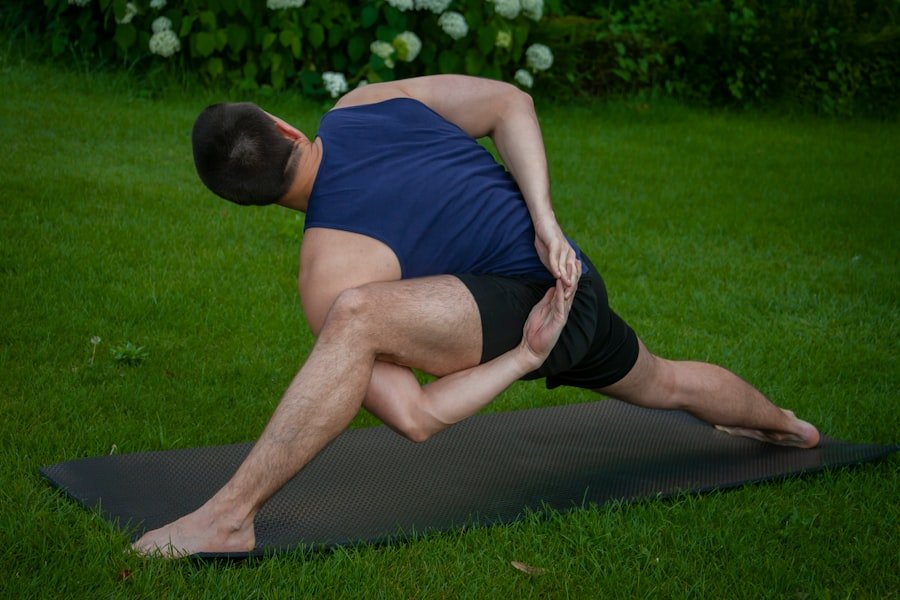
Dynamic stretching is an effective way to enhance hip flexibility while preparing the body for physical activity. Unlike static stretching, which involves holding a stretch for an extended period, dynamic stretching incorporates movement to increase blood flow and warm up the muscles. This type of stretching can be particularly beneficial before workouts or sports activities, as it helps activate the muscles around the hips and improves overall mobility.
Examples of dynamic stretches for hip flexibility include leg swings, walking lunges with a twist, and high knees. Leg swings can be performed by standing next to a wall or support and swinging one leg forward and backward in a controlled manner. This movement not only stretches the hip flexors but also engages the glutes and hamstrings.
Walking lunges with a twist involve stepping forward into a lunge position while rotating the torso toward the front leg, which helps stretch the hip flexors while also engaging the core. Incorporating these dynamic stretches into a warm-up routine can significantly improve hip flexibility and prepare the body for more intense physical activity.
Utilizing Yoga and Pilates for Hip Flexibility
Yoga and Pilates are two disciplines that emphasize core strength, balance, and flexibility, making them excellent choices for improving hip mobility. Both practices incorporate a variety of poses and movements that target the hips specifically, promoting greater range of motion and reducing tightness. In yoga, poses such as Pigeon Pose, Butterfly Pose, and Warrior II are particularly effective for opening up the hips and stretching surrounding muscles.
Pigeon Pose is known for its ability to deeply stretch the hip rotators and flexors while also promoting relaxation. Practicing this pose regularly can help alleviate tension in tight hips and improve overall flexibility. Similarly, Butterfly Pose encourages external rotation of the hips while stretching the inner thighs.
On the other hand, Pilates focuses on controlled movements that strengthen the core while enhancing flexibility. Exercises like the Hip Roll and Leg Circles target the hip muscles directly, promoting both strength and flexibility in a balanced manner.
Strengthening Exercises for the Hip Muscles
| Step | Exercise/Technique | Duration/Frequency | Target Area | Expected Benefit |
|---|---|---|---|---|
| 1 | Hip Flexor Stretch (Lunge Stretch) | 30 seconds per side, 2-3 times daily | Hip flexors | Reduces tightness and improves hip extension |
| 2 | Seated Butterfly Stretch | 30 seconds, 2-3 times daily | Inner thighs and hips | Increases hip adductor flexibility |
| 3 | Pigeon Pose | 30-60 seconds per side, once daily | Glutes and hip rotators | Improves external rotation and hip mobility |
| 4 | Dynamic Leg Swings (Front-to-Back and Side-to-Side) | 10-15 swings per leg, daily | Hip flexors and abductors | Enhances dynamic flexibility and blood flow |
| 5 | Foam Rolling of Hip Muscles | 1-2 minutes per muscle group, 3-4 times weekly | Hip flexors, glutes, IT band | Releases muscle tightness and improves tissue quality |
| 6 | Strengthening Exercises (Glute Bridges, Clamshells) | 2-3 sets of 10-15 reps, 3 times weekly | Glutes and hip stabilizers | Supports hip alignment and prevents tightness |
| 7 | Consistent Daily Practice | 10-15 minutes daily | Overall hip region | Gradual improvement in flexibility and mobility |
While stretching is essential for improving flexibility, strengthening exercises are equally important for maintaining healthy hips. A balanced approach that includes both stretching and strengthening can help prevent injuries and improve overall function. Key muscle groups around the hips include the glutes, hip flexors, adductors, and abductors.
Strengthening these muscles can enhance stability and support better movement patterns. Exercises such as squats, lunges, and glute bridges are excellent for building strength in the hip region. Squats engage multiple muscle groups while specifically targeting the glutes and quadriceps.
Lunges not only strengthen these muscles but also improve balance and coordination. Glute bridges focus on activating the glutes while promoting hip extension, which is crucial for activities like running and jumping. Incorporating resistance bands or weights into these exercises can further enhance their effectiveness by providing additional resistance.
Using Foam Rolling and Self-Massage Techniques
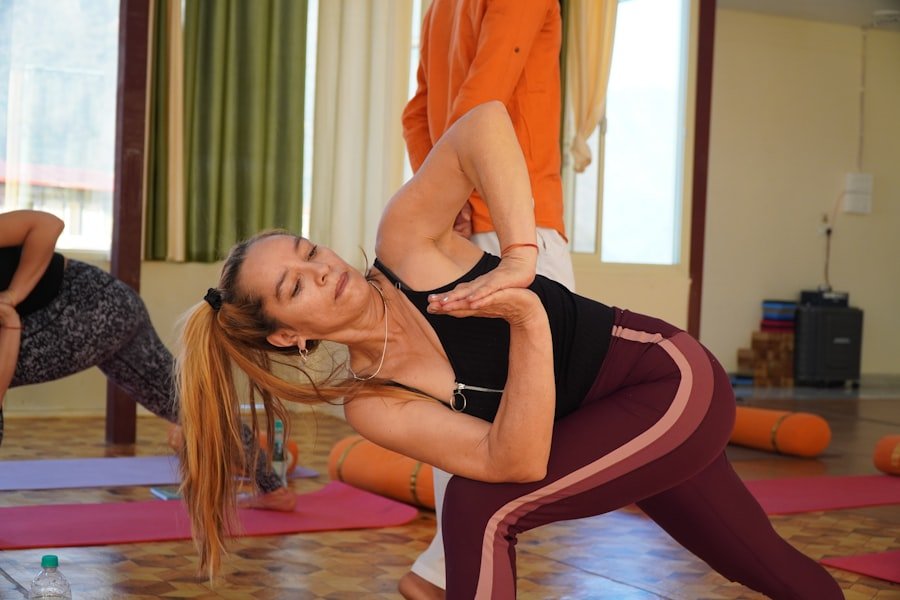
Foam rolling and self-massage techniques are valuable tools for releasing tension in tight muscles around the hips. Foam rolling involves using a cylindrical foam roller to apply pressure to specific muscle groups, helping to break up adhesions and improve blood flow. This technique can be particularly effective for targeting tight areas in the hip flexors, glutes, and IT band.
To foam roll effectively, individuals should focus on slow movements over tight areas while applying enough pressure to feel discomfort without causing pain. For instance, rolling over the gluteal muscles can help release tension that may be contributing to tightness in the hips. Similarly, using a lacrosse ball or massage ball can provide targeted relief for specific trigger points in the hip region.
Self-massage techniques can also be beneficial; using hands or tools like massage sticks can help alleviate tightness in hard-to-reach areas.
Seeking Professional Help: Physical Therapy and Chiropractic Care
For individuals experiencing persistent hip tightness or pain that does not improve with self-care strategies, seeking professional help may be necessary. Physical therapists specialize in assessing movement patterns and identifying underlying issues contributing to tightness or discomfort. They can develop personalized rehabilitation programs that include targeted exercises, stretches, and manual therapy techniques designed to improve hip flexibility.
Chiropractic care can also play a role in addressing hip tightness by focusing on spinal alignment and joint mobility. Chiropractors use various techniques to manipulate joints and improve overall function within the musculoskeletal system. By addressing misalignments in the pelvis or spine, chiropractic care can help alleviate tension in surrounding muscles, including those around the hips.
Both physical therapy and chiropractic care offer valuable insights into maintaining healthy hips and preventing future issues.
Maintaining Flexibility and Preventing Tightness in the Hips
Once individuals have improved their hip flexibility through various methods, it is essential to maintain that progress over time. Consistency is key; incorporating regular stretching routines into daily life can help prevent tightness from returning. Setting aside time each day for dynamic stretching or yoga can keep the hips limber and functional.
Additionally, being mindful of posture during daily activities is crucial for maintaining hip health. Sitting with proper alignment, taking breaks from prolonged sitting, and engaging in regular physical activity can all contribute to preventing tightness in the hips. Cross-training with different forms of exercise can also help ensure that all muscle groups around the hips are engaged evenly, reducing the risk of imbalances that lead to tightness.
In conclusion, understanding hip flexibility’s importance is vital for enhancing performance in various activities while ensuring overall well-being. By identifying causes of tightness, incorporating dynamic stretching routines, utilizing practices like yoga and Pilates, strengthening surrounding muscles, employing foam rolling techniques, seeking professional assistance when necessary, and maintaining flexibility through consistent practice, individuals can achieve optimal hip health that supports both athletic endeavors and daily living activities.
FAQs
What causes tight hips?
Tight hips can be caused by prolonged sitting, lack of physical activity, muscle imbalances, or previous injuries. These factors can lead to shortened hip flexors and reduced range of motion.
Why is improving hip flexibility important?
Improving hip flexibility enhances overall mobility, reduces the risk of injury, alleviates lower back pain, and improves posture and athletic performance.
What is a stepwise approach to improving hip flexibility?
A stepwise approach involves gradually progressing through stages of stretching and strengthening exercises, starting with gentle movements and advancing to more intense stretches to safely increase hip flexibility over time.
How often should I perform hip flexibility exercises?
For best results, hip flexibility exercises should be performed consistently, ideally 3-5 times per week, allowing time for recovery and adaptation.
Can beginners safely improve tight hips on their own?
Yes, beginners can improve tight hips safely by following a structured routine that includes proper warm-up, gentle stretching, and gradual progression. Consulting a fitness professional or physical therapist is recommended if unsure.
What types of exercises are effective for tight hips?
Effective exercises include dynamic stretches like leg swings, static stretches such as the pigeon pose, hip flexor stretches, and strengthening exercises targeting the glutes and core.
How long does it take to see improvement in hip flexibility?
Improvement varies by individual but typically can be noticed within a few weeks of consistent practice, with significant gains over several months.
Are there any risks associated with stretching tight hips?
If done improperly or too aggressively, stretching can cause muscle strain or injury. It is important to stretch gently, avoid bouncing, and listen to your body’s limits.
Can improving hip flexibility help with lower back pain?
Yes, increased hip flexibility can reduce strain on the lower back by improving pelvic alignment and movement patterns, potentially alleviating lower back pain.
Should I combine flexibility exercises with other types of training?
Combining flexibility exercises with strength training and cardiovascular activities can provide balanced fitness, support joint health, and enhance overall mobility.