

Ankle strength is fundamental to physical performance and stability. The ankle joint comprises bones, ligaments, tendons, and muscles that coordinate to enable movement and support body weight. Strong ankles maintain balance during dynamic activities including running, jumping, and pivoting.
A strong ankle absorbs shock more effectively and resists stress during physical activity. This strength improves athletic performance and supports everyday functions such as walking and climbing stairs, making it essential for functional fitness. Strong ankles also prevent injury.
Weak or unstable ankles increase the risk of sprains and other injuries, particularly in sports requiring rapid directional changes or jumping. Ankle sprains are among the most common injuries in recreational and professional athletes, often resulting from insufficient joint strength or stability. Developing ankle strength significantly reduces injury risk, enabling individuals to participate in activities with greater confidence and safety.
This preventive approach is especially important for athletes who depend on lower extremity performance and for older adults who face increased fall risk from weakened muscles and joints.
Common Causes of Ankle Sprains
Ankle sprains occur when the ligaments that support the ankle are stretched or torn, often resulting from sudden movements or awkward landings. One of the most prevalent causes of ankle sprains is rolling or twisting the ankle during physical activities. This can happen in various sports, such as basketball, soccer, or tennis, where quick lateral movements are common.
For instance, a basketball player may land awkwardly after a jump, causing the ankle to roll inward and leading to a sprain. The severity of the sprain can vary depending on the extent of ligament damage, ranging from mild stretching to complete tears. Another common cause of ankle sprains is uneven surfaces.
Walking or running on uneven terrain can increase the likelihood of misstepping and rolling the ankle. This is particularly relevant for trail runners or hikers who navigate rocky paths or steep inclines. Additionally, wearing inappropriate footwear can contribute to ankle instability.
Shoes that lack proper support or cushioning can fail to stabilize the foot during movement, making it easier for the ankle to twist or roll. For example, high-heeled shoes or flip-flops provide minimal support and can increase the risk of spraining an ankle while walking on uneven surfaces.
Benefits of Ankle Strengthening Exercises
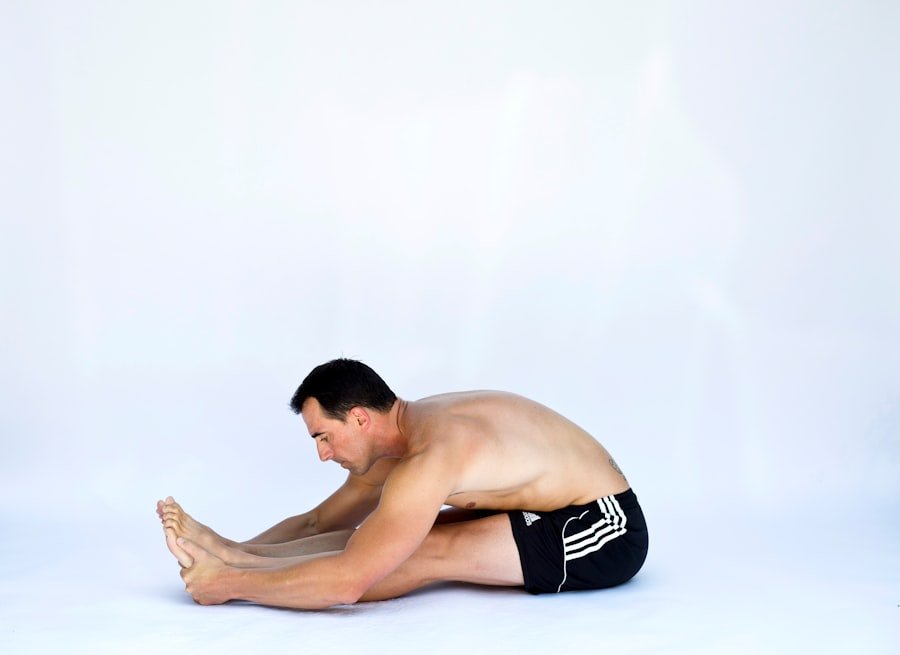
Engaging in ankle strengthening exercises offers numerous benefits that extend beyond merely preventing injuries. One of the primary advantages is improved stability and balance. Stronger ankle muscles help maintain proper alignment during movement, reducing the risk of falls and enhancing overall coordination.
This is particularly beneficial for athletes who require precise footwork and agility in their respective sports. Improved balance not only aids in athletic performance but also enhances daily activities, allowing individuals to navigate their environment with greater ease. Additionally, ankle strengthening exercises can enhance overall lower body strength and functionality.
The muscles surrounding the ankle are interconnected with those in the calf and foot, meaning that strengthening one area can positively impact others. For instance, exercises that target the ankle can also improve calf strength, which is essential for activities like running and jumping. Furthermore, stronger ankles contribute to better proprioception—the body’s ability to sense its position in space—which is crucial for athletic performance and injury prevention.
Enhanced proprioception allows individuals to react more quickly to changes in their environment, reducing the likelihood of missteps that could lead to sprains.
Types of Ankle Strengthening Exercises
There are various types of exercises designed specifically to strengthen the ankle joint and surrounding muscles. One effective category includes resistance exercises that target the muscles responsible for ankle movement. For example, resistance band exercises can be particularly beneficial.
By anchoring a resistance band to a stable object and placing it around the foot, individuals can perform dorsiflexion (lifting the foot upwards), plantarflexion (pointing the toes downwards), inversion (turning the foot inward), and eversion (turning the foot outward). These movements engage different muscle groups around the ankle, promoting balanced strength development. Another effective type of exercise is balance training, which focuses on improving stability and proprioception.
Simple exercises such as standing on one leg or using a balance board can significantly enhance ankle strength and coordination. For instance, standing on one leg while maintaining balance for an extended period challenges the stabilizing muscles around the ankle and improves overall joint function. Incorporating dynamic movements into balance training—such as reaching forward or sideways while balancing—can further enhance strength and stability by mimicking real-life scenarios where quick adjustments are necessary.
Proper Technique for Ankle Strengthening Exercises
| Exercise | Target Muscle Group | Repetitions | Sets | Frequency | Benefits |
|---|---|---|---|---|---|
| Ankle Circles | All ankle muscles | 10 circles each direction | 3 | Daily | Improves ankle mobility and flexibility |
| Heel Raises | Calf muscles, Achilles tendon | 15 | 3 | 3-4 times per week | Strengthens calves and stabilizes ankles |
| Resistance Band Inversion | Inverters of the ankle (tibialis posterior) | 15 | 3 | 3 times per week | Strengthens muscles that prevent ankle rolling |
| Resistance Band Eversion | Evertors of the ankle (peroneal muscles) | 15 | 3 | 3 times per week | Improves lateral ankle stability |
| Single-Leg Balance | Proprioceptors and stabilizing muscles | Hold for 30 seconds | 3 | Daily | Enhances balance and ankle joint control |
| Toe Walking | Calf muscles and ankle stabilizers | Walk 20 meters | 3 | 3 times per week | Strengthens ankle and improves endurance |
| Walking on Uneven Surfaces | All ankle stabilizers and proprioceptors | 5-10 minutes | 1 | 2-3 times per week | Improves ankle stability and reaction to uneven terrain |
Executing ankle strengthening exercises with proper technique is essential for maximizing benefits and minimizing the risk of injury. When performing resistance band exercises, it is crucial to maintain controlled movements throughout each repetition. For instance, during dorsiflexion, one should avoid jerking the foot upwards; instead, focus on a slow and steady lift while engaging the muscles in the front of the lower leg.
Similarly, when performing plantarflexion, ensure that the movement is smooth and deliberate to effectively target the calf muscles without straining the ankle joint. In balance training exercises, maintaining proper posture is equally important. When standing on one leg, individuals should keep their hips level and avoid leaning excessively to one side.
Engaging the core muscles can help stabilize the body and improve balance during these exercises. Additionally, it is beneficial to perform these exercises on a stable surface before progressing to more challenging environments, such as uneven ground or balance boards. This gradual progression allows individuals to build confidence in their ankle strength while ensuring that they are using correct form throughout each exercise.
Frequency and Duration of Ankle Strengthening Exercises

To achieve optimal results from ankle strengthening exercises, consistency is key. It is generally recommended that individuals engage in these exercises at least two to three times per week. This frequency allows for adequate muscle stimulation while providing sufficient recovery time between sessions.
Each session should ideally last between 15 to 30 minutes, depending on individual fitness levels and goals. During this time, individuals can incorporate a variety of exercises targeting different aspects of ankle strength and stability. Incorporating a warm-up before starting any strengthening routine is essential for preparing the muscles and joints for activity.
A warm-up could include light aerobic activity followed by dynamic stretches that focus on the lower body. After completing strengthening exercises, it is equally important to cool down with static stretches targeting the calves and ankles to promote flexibility and prevent stiffness. By adhering to this structured approach—consistent frequency combined with proper warm-up and cool-down practices—individuals can effectively enhance their ankle strength over time.
Additional Tips for Preventing Ankle Sprains
Preventing ankle sprains involves more than just strengthening exercises; it requires a comprehensive approach that includes proper footwear choices and environmental awareness. Selecting shoes that provide adequate support and cushioning is crucial for maintaining ankle stability during physical activities. Athletes should opt for sport-specific footwear designed to accommodate their movements while providing necessary support.
For example, basketball shoes often feature high tops that offer additional ankle support compared to running shoes. Environmental awareness also plays a significant role in preventing sprains. Individuals should be mindful of their surroundings when engaging in physical activities—especially on uneven surfaces or during inclement weather conditions that may increase slip hazards.
Incorporating agility drills into training routines can also enhance an athlete’s ability to navigate unexpected changes in direction safely. These drills not only improve overall agility but also train the body’s response mechanisms to maintain balance during sudden movements.
When to Seek Professional Help
While many individuals can manage mild ankle sprains with rest and rehabilitation exercises, there are instances when professional help is necessary. If an individual experiences severe pain, swelling, or difficulty bearing weight on the affected ankle following an injury, it is crucial to seek medical attention promptly. A healthcare professional can conduct a thorough assessment to determine the extent of the injury and recommend appropriate treatment options.
Additionally, if an individual finds themselves frequently experiencing ankle sprains despite engaging in strengthening exercises and taking preventive measures, consulting with a physical therapist or sports medicine specialist may be beneficial. These professionals can provide personalized assessments and tailored rehabilitation programs designed to address specific weaknesses or imbalances contributing to recurrent injuries. Early intervention not only aids recovery but also helps establish a solid foundation for long-term ankle health and performance enhancement.
FAQs
What are common causes of ankle sprains?
Ankle sprains typically occur due to sudden twisting or rolling of the ankle, often during physical activities like running, jumping, or walking on uneven surfaces. Weak or unstable ankle muscles can also increase the risk of sprains.
Why is it important to strengthen ankles?
Strengthening the ankles improves stability, balance, and support, which helps prevent injuries such as sprains. Strong ankle muscles can better absorb impact and reduce the likelihood of rolling or twisting the ankle.
What types of exercises help strengthen ankles?
Exercises that improve ankle strength include balance training, resistance band exercises, calf raises, heel walks, toe walks, and ankle circles. These exercises target the muscles around the ankle joint to enhance stability and flexibility.
How often should ankle strengthening exercises be performed?
For best results, ankle strengthening exercises should be done 2 to 3 times per week. Consistency is key to building strength and preventing injuries over time.
Can ankle strengthening exercises help after an injury?
Yes, ankle strengthening exercises are often recommended during rehabilitation to restore strength, improve range of motion, and prevent future sprains. However, it is important to follow a healthcare professional’s guidance during recovery.
Are balance exercises effective in preventing ankle sprains?
Yes, balance exercises improve proprioception (body awareness) and coordination, which are crucial for preventing ankle sprains. They help the body react quickly to uneven surfaces or sudden movements.
Should I warm up before doing ankle exercises?
Warming up with light aerobic activity and gentle ankle movements is recommended before performing strengthening exercises. This increases blood flow and reduces the risk of injury.
Can ankle braces or supports replace strengthening exercises?
Ankle braces can provide temporary support and protection, but they do not replace the benefits of strengthening exercises. Building strong ankle muscles is essential for long-term injury prevention.
Is it necessary to consult a professional before starting ankle exercises?
If you have a history of ankle injuries or pain, it is advisable to consult a healthcare professional or physical therapist before starting an exercise program to ensure the exercises are safe and appropriate for your condition.