Rotator cuff injuries are among the most common musculoskeletal disorders affecting the shoulder, particularly in individuals who engage in repetitive overhead activities or those who are aging. The rotator cuff is a group of four muscles and their associated tendons that stabilize the shoulder joint and allow for a wide range of motion. These muscles—supraspinatus, infraspinatus, teres minor, and subscapularis—work together to keep the head of the humerus securely within the shallow socket of the shoulder blade.
When any of these muscles or tendons become damaged, whether through acute injury or chronic wear and tear, it can lead to pain, weakness, and limited mobility. Injuries to the rotator cuff can manifest in various forms, including tendinitis, bursitis, and tears. Tendinitis is characterized by inflammation of the tendons, often resulting from overuse or repetitive strain.
Bursitis involves inflammation of the bursa, a small fluid-filled sac that reduces friction between moving parts in the shoulder. Tears can be partial or complete and may occur suddenly due to trauma or develop gradually due to degeneration over time. Identifying the specific nature of a rotator cuff injury is essential for determining the appropriate treatment and rehabilitation strategies.
Rest and Ice for Pain Management
One of the first steps in managing a rotator cuff injury is to allow the affected area to rest. This means avoiding activities that exacerbate pain or strain the shoulder. Rest is essential for reducing inflammation and preventing further damage to the rotator cuff.
Depending on the severity of the injury, this may involve modifying daily activities or temporarily using a sling to immobilize the shoulder. The goal during this phase is to minimize discomfort while promoting healing. In conjunction with rest, applying ice to the injured area can significantly alleviate pain and swelling.
Ice therapy works by constricting blood vessels, which reduces blood flow to the area and helps decrease inflammation. It is generally recommended to apply ice for 15-20 minutes every few hours during the initial days following an injury. This can be done using an ice pack wrapped in a cloth or a bag of frozen peas, which conforms well to the shoulder’s contours.
Care should be taken to avoid direct contact with the skin to prevent frostbite. Combining rest with ice therapy creates an effective initial approach to managing pain associated with rotator cuff injuries.
Gentle Range of Motion Exercises

Once the acute pain has subsided, gentle range of motion exercises can be introduced to help restore mobility in the shoulder joint. These exercises are designed to promote flexibility without placing undue stress on the injured rotator cuff. Simple movements such as pendulum swings, where the arm hangs down and swings gently in circles, can help maintain joint mobility while minimizing strain on the muscles and tendons.
Another effective range of motion exercise involves using a towel or a stick to assist with shoulder elevation. By holding one end of a towel with the affected arm and using the other hand to pull gently upward, individuals can gradually increase their range of motion without forcing the shoulder into painful positions. It is crucial to perform these exercises slowly and within a pain-free range to avoid exacerbating the injury.
Consistent practice of gentle range of motion exercises can lay a solid foundation for further rehabilitation efforts.
Strengthening Exercises for the Rotator Cuff Muscles
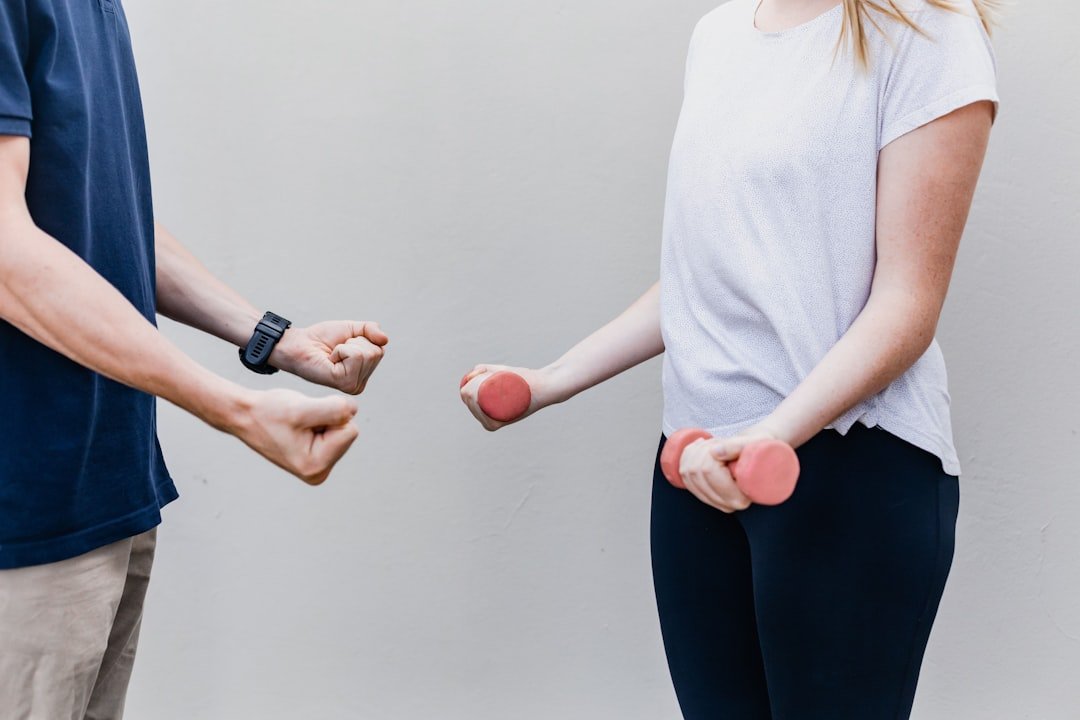
As healing progresses and range of motion improves, strengthening exercises become an essential component of rehabilitation for rotator cuff injuries. Strengthening these muscles not only aids in recovery but also helps prevent future injuries by enhancing stability around the shoulder joint. Resistance bands are often used in these exercises due to their versatility and ability to provide varying levels of resistance.
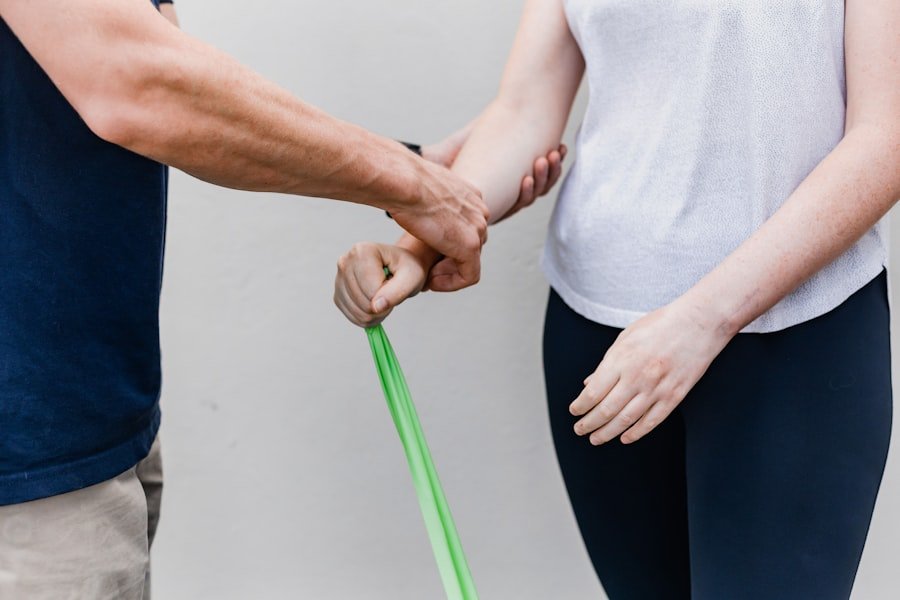
One common strengthening exercise is external rotation with a resistance band. To perform this exercise, an individual stands with their elbow bent at 90 degrees and tucked against their side while holding one end of the band. By rotating the forearm outward against the resistance of the band, they engage the infraspinatus and teres minor muscles, which are crucial for shoulder stability.
Similarly, internal rotation exercises can be performed by pulling the band inward towards the body, targeting the subscapularis muscle. Incorporating these strengthening exercises into a regular routine can significantly enhance shoulder function and resilience. It is important to start with low resistance and gradually increase as strength improves, ensuring that proper form is maintained throughout each movement.
Proper Posture and Body Mechanics
| Metric | Value | Details |
|---|---|---|
| Average Recovery Time | 6-8 weeks | Time to regain functional shoulder movement with consistent home exercises |
| Recommended Frequency | 3-5 times per week | Number of exercise sessions advised for optimal recovery |
| Session Duration | 20-30 minutes | Typical length of each home rehab session |
| Success Rate | 75-85% | Percentage of patients reporting significant pain reduction and improved function |
| Common Exercises | Pendulum swings, wall crawls, resistance band external rotation | Typical exercises included in home rehab programs |
| Patient Compliance | 70-80% | Estimated adherence rate to prescribed home exercise routines |
| Risk of Re-injury | Low to Moderate | Depends on adherence and gradual progression of exercises |
| Improvement in Range of Motion | 30-50% | Average increase in shoulder mobility after rehab period |
Maintaining proper posture and body mechanics is vital for preventing rotator cuff injuries and ensuring optimal shoulder function during daily activities. Poor posture, such as slouching or rounding the shoulders forward, can place undue stress on the rotator cuff muscles and tendons over time. Individuals should strive to keep their shoulders back and down while engaging their core muscles to support proper alignment.
In addition to posture, body mechanics during activities such as lifting or reaching play a significant role in shoulder health. When lifting objects, it is essential to use the legs rather than relying solely on arm strength. Keeping objects close to the body reduces strain on the shoulders and minimizes the risk of injury.
Similarly, when reaching overhead, individuals should avoid excessive extension of the shoulder joint; instead, they should use a step stool or ladder when necessary to bring items within reach without straining. By being mindful of posture and body mechanics, individuals can create a more supportive environment for their shoulders, reducing the likelihood of developing rotator cuff injuries in both work and recreational settings.
Gradual Return to Daily Activities
Returning to daily activities after a rotator cuff injury should be approached with caution and patience. It is essential to gradually reintroduce movements that were previously painful or restricted while monitoring for any signs of discomfort or regression in healing. This process often begins with light activities that do not place excessive strain on the shoulder.
For instance, individuals may start by performing simple tasks such as brushing their teeth or combing their hair with minimal resistance before progressing to more demanding activities like lifting grocery bags or participating in sports. It is crucial to listen to one’s body during this transition; if pain reoccurs during any activity, it may be necessary to scale back and focus on rehabilitation exercises before attempting that movement again. Additionally, incorporating rest periods into daily routines can help manage fatigue and prevent overexertion as one returns to normal activities.
This gradual approach not only aids in physical recovery but also builds confidence in using the shoulder without fear of re-injury.
Prevention of Future Injuries
Preventing future rotator cuff injuries involves a multifaceted approach that includes regular exercise, proper warm-up routines, and awareness of body mechanics during activities. Engaging in strength training exercises that target not only the rotator cuff but also surrounding muscle groups—such as those in the back, chest, and core—can enhance overall shoulder stability and function. Incorporating flexibility training into one’s routine is equally important; stretching exercises for both the shoulder and upper back can improve range of motion and reduce tension in tight muscles that may contribute to injury risk.
Activities such as yoga or Pilates can be beneficial for promoting flexibility while also emphasizing proper alignment and body awareness. Moreover, individuals should be mindful of their activity levels and avoid sudden increases in intensity or duration when engaging in sports or physical labor. Gradually building up endurance and strength allows the body to adapt more effectively, reducing susceptibility to injuries over time.
When to Seek Professional Help
While many rotator cuff injuries can be managed through conservative measures such as rest, ice therapy, and rehabilitation exercises, there are instances when professional help is warranted. If pain persists despite following a home management plan or if there is significant weakness or loss of function in the shoulder, it may be time to consult a healthcare professional. A physical therapist can provide tailored rehabilitation programs that address specific deficits related to an individual’s injury while also offering guidance on proper techniques for exercises and daily activities.
In some cases, imaging studies such as MRI may be necessary to assess the extent of damage within the rotator cuff structures. Additionally, if symptoms such as persistent swelling, severe pain that does not improve with rest, or difficulty sleeping due to shoulder discomfort arise, seeking medical attention is advisable. Early intervention can lead to more effective treatment outcomes and help prevent long-term complications associated with untreated rotator cuff injuries.
FAQs
What is a mild rotator cuff injury?
A mild rotator cuff injury typically involves minor strains or small tears in the muscles or tendons that stabilize the shoulder joint. These injuries often cause pain, weakness, and limited range of motion but do not usually require surgical intervention.
Can mild rotator cuff injuries be treated at home?
Yes, many mild rotator cuff injuries can be effectively managed with home-based rehabilitation, including rest, ice application, gentle stretching, and strengthening exercises designed to improve shoulder function and reduce pain.
What are common home-based rehab exercises for mild rotator cuff injuries?
Common exercises include pendulum swings, wall crawls, internal and external rotation stretches, and scapular stabilization exercises. These help restore mobility and strengthen the shoulder muscles without causing further injury.
How long does home-based rehab for a mild rotator cuff injury usually take?
Recovery time varies but typically ranges from 4 to 8 weeks with consistent rehabilitation. Progress depends on the severity of the injury, adherence to the exercise program, and avoiding activities that aggravate the shoulder.
When should I see a healthcare professional during home rehab?
If pain worsens, mobility decreases, or there is no improvement after several weeks of home rehab, it is important to consult a healthcare professional. They can assess the injury and recommend further treatment if necessary.
Are there any precautions to take during home-based rehab?
Yes, avoid heavy lifting, overhead activities, or movements that cause sharp pain. Perform exercises slowly and within a pain-free range. It is also advisable to follow a structured program provided by a physical therapist or healthcare provider.
Can home-based rehab prevent future rotator cuff injuries?
Proper rehabilitation can strengthen shoulder muscles and improve flexibility, which may reduce the risk of future injuries. However, maintaining good posture and avoiding repetitive strain are also important preventive measures.
Is pain medication necessary during home rehab for mild rotator cuff injuries?
Over-the-counter pain relievers like acetaminophen or NSAIDs can help manage pain and inflammation during rehab. However, medication should be used as directed and not as a substitute for proper exercise and rest.
Can I return to sports or heavy activities after home-based rehab?
Return to sports or heavy activities should be gradual and only after regaining full pain-free range of motion and strength. It is best to get clearance from a healthcare professional before resuming intense physical activities.