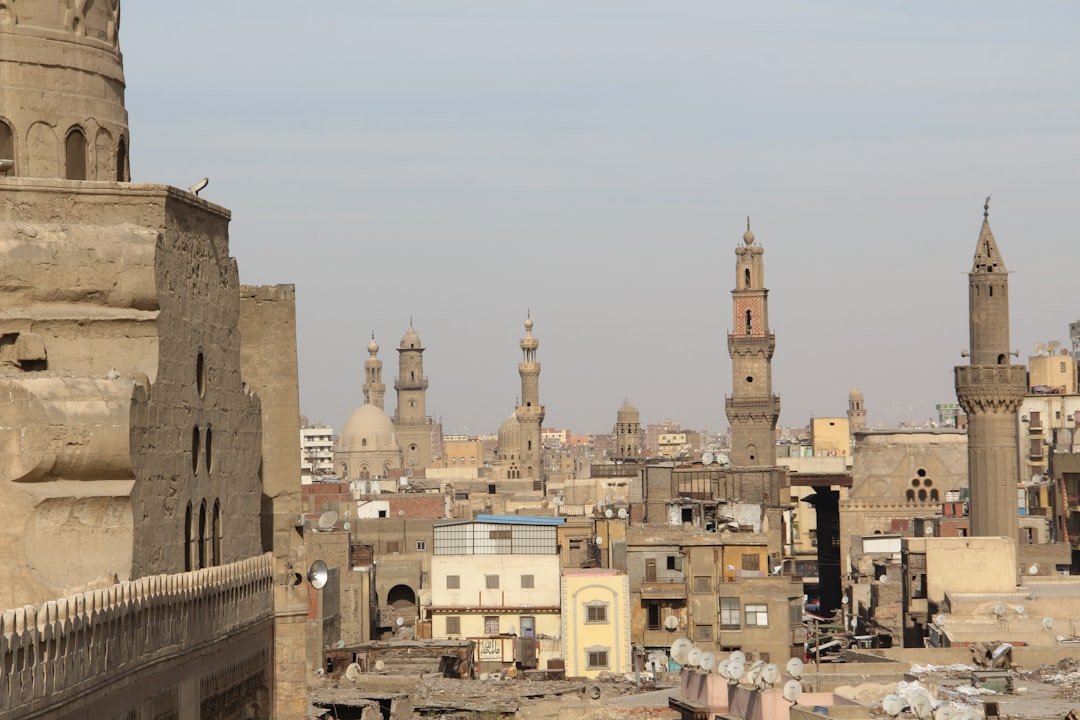
Old Cairo contains numerous historical palaces that represent significant examples of architectural heritage from different periods. The Palace of Al-Ghuri, constructed in the early 16th century, exemplifies the architectural style of the Mamluk era. The structure features intricate carved details and distinctive dome designs.
Although less visited than other Cairo landmarks, the palace’s courtyard preserves architectural elements that reflect its original design and function as an administrative and social center during its period of active use. The Qasr al-Nil Palace served as a royal residence during the reign of King Farouk in the 20th century. The building incorporates formal gardens and substantial architectural features characteristic of royal palaces from that era.
The palace’s interior contains decorative wall paintings and classical columns. Currently, the structure requires restoration work. Historical records document that the palace hosted official state functions and royal events during its operational period.
These palaces provide documented evidence of Cairo’s architectural development across multiple centuries. The structures demonstrate construction techniques, decorative practices, and spatial organization typical of their respective historical periods. Examination of these buildings contributes to understanding the administrative systems, social organization, and cultural practices of their time periods.
The palaces represent important examples of Cairo’s built heritage and warrant preservation and scholarly study.
Unearthing Ancient Tombs and Temples
The landscape of Cairo is dotted with ancient tombs and temples that date back thousands of years, each one a portal into the past. The necropolis of Saqqara, located just outside the city, is one such site where archaeologists have made significant discoveries. The Step Pyramid of Djoser, built during the Third Dynasty, is one of the earliest monumental stone structures in history.
Recent excavations have unearthed a series of burial shafts and artifacts that provide insight into the funerary practices of ancient Egyptians. These findings not only enhance our understanding of their beliefs about the afterlife but also shed light on their daily lives through the objects they chose to accompany their dead. In addition to Saqqara, the Valley of the Kings, located further south in Luxor but often associated with Cairo’s archaeological narrative, has yielded some of the most significant tombs in Egyptian history.
The tomb of Tutankhamun, discovered in 1922 by Howard Carter, remains one of the most famous due to its wealth of artifacts and the mystery surrounding the young pharaoh’s life and death. The meticulous preservation of these tombs allows researchers to study ancient burial customs and the socio-political dynamics of the time. Each tomb serves as a time capsule, revealing not only the artistry and craftsmanship of ancient Egyptians but also their complex relationship with death and immortality.
Exploring the Secret Passageways of Medieval Cairo
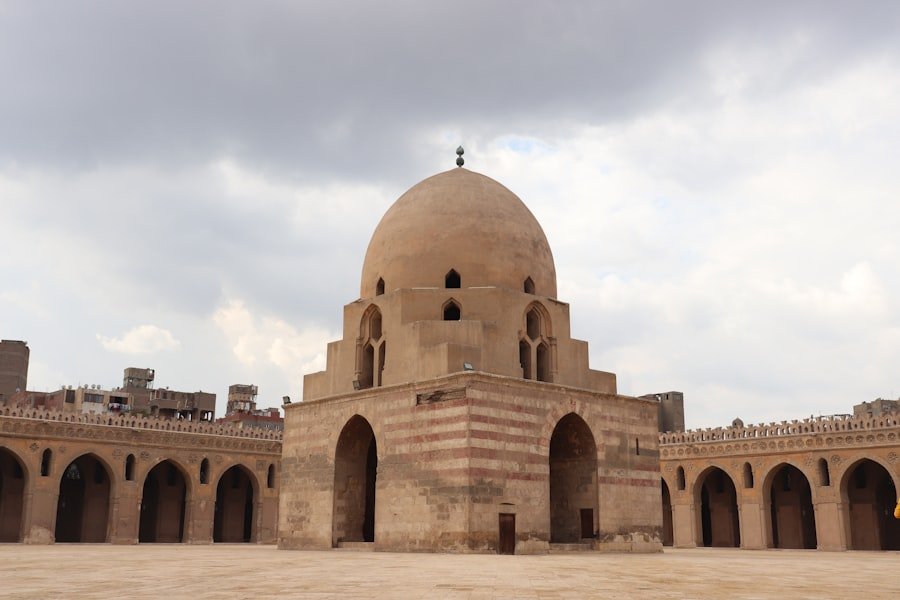
Medieval Cairo is a labyrinthine wonderland filled with secret passageways that tell stories of intrigue and adventure. These narrow alleys and hidden corridors were once bustling with merchants, scholars, and travelers, creating a vibrant tapestry of life in the city. One such passageway is Al-Muizz Street, which dates back to the Fatimid period and is lined with stunning examples of Islamic architecture.
As one wanders through this historic thoroughfare, it becomes evident that each building has its own story to tell—be it a grand mosque or a humble shopfront. The secret passageways also served as conduits for trade and communication during times of conflict. For instance, during the Crusades, these hidden routes allowed for discreet movement across the city, enabling merchants to transport goods without drawing attention.
The architectural design of these passageways often included features such as arches and vaulted ceilings that not only provided structural integrity but also created an atmosphere of mystery and allure. Exploring these hidden paths offers a unique perspective on medieval life in Cairo, revealing how geography influenced social interactions and economic activities.
The Hidden Treasures of Islamic Cairo
Islamic Cairo is renowned for its stunning mosques and vibrant bazaars, yet it also harbors hidden treasures that often go unnoticed by visitors. One such treasure is the Khan el-Khalili market, a bustling bazaar that has been in operation since the 14th century. While many come to shop for souvenirs or sample local delicacies, few realize that this market is steeped in history.
The intricate architecture and design elements reflect centuries of trade and cultural exchange, making it a living museum in its own right. Beyond the market lies Al-Azhar University, one of the oldest universities in the world, founded in 970 AD. While it is well-known for its academic contributions to Islamic scholarship, many are unaware of its architectural significance.
The university’s complex features stunning courtyards and intricately designed prayer halls that showcase Islamic art at its finest. These hidden gems within Islamic Cairo not only enrich our understanding of the city’s historical significance but also highlight the ongoing legacy of Islamic culture in contemporary society.
Rediscovering the Lost Mosques and Madrasas
| Site Name | Location | Historical Period | Significance | Visitor Count (Annual) | Accessibility |
|---|---|---|---|---|---|
| Bab Zuweila | Old Cairo | Fatimid Era (11th Century) | One of the last remaining gates of the old city walls | 50,000 | Moderate (stairs to climb) |
| Al-Muizz Street | Historic Cairo | Medieval Islamic Period | Longest continuous medieval street with Islamic architecture | 120,000 | High (pedestrian-friendly) |
| Nilometer on Rhoda Island | Rhoda Island | Ancient Egypt (3rd Century AD) | Ancient device used to measure Nile River flood levels | 10,000 | Low (limited access) |
| Gayer-Anderson Museum | Near Mosque of Ibn Tulun | 17th Century Ottoman Period | Historic house museum with Islamic art and architecture | 30,000 | High (well-maintained) |
| Al-Hakim Mosque | Historic Cairo | Fatimid Era (10th-11th Century) | One of the oldest mosques in Cairo with unique architecture | 40,000 | Moderate |
Cairo’s skyline is punctuated by minarets and domes, yet many mosques and madrasas have faded into obscurity over time. The Mosque of Ibn Tulun, built in the 9th century, is one such example that stands as a testament to early Islamic architecture. Its vast courtyard and unique spiral minaret are remarkable features that attract scholars and tourists alike.
However, many smaller mosques scattered throughout the city remain largely forgotten despite their historical importance. The madrasas associated with these mosques often served as centers for learning and community engagement during their heyday. For instance, Al-Azhar Mosque not only functions as a place of worship but also as an educational institution where students from around the world gather to study Islamic theology.
Rediscovering these lost mosques and madrasas allows us to appreciate their role in shaping Cairo’s intellectual landscape while also recognizing their contributions to Islamic thought throughout history.
Delving into the Underground Cisterns and Tunnels
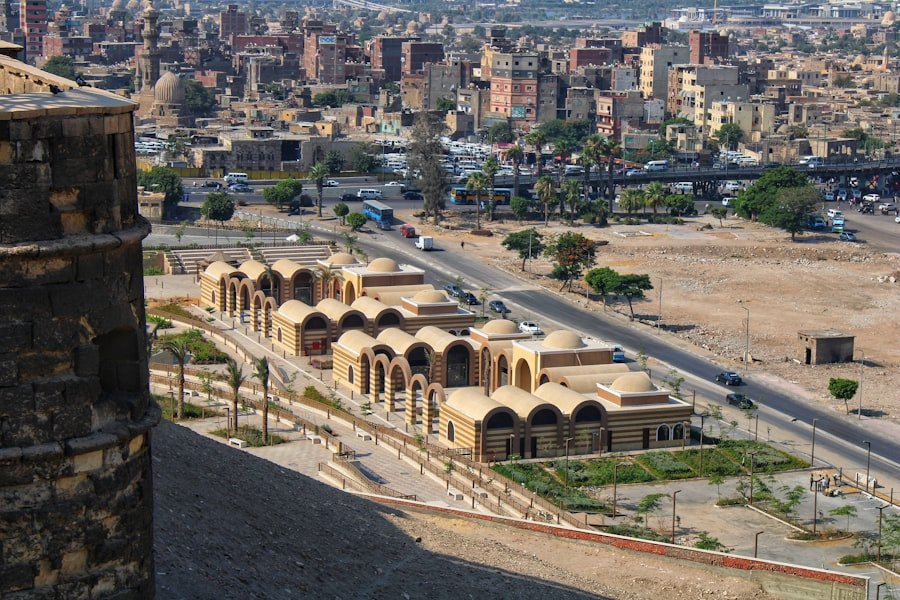
Beneath the bustling streets of Cairo lies an intricate network of underground cisterns and tunnels that have played a crucial role in the city’s history. These subterranean structures were essential for water storage and distribution in a city where access to fresh water was often limited. The Cistern of Al-Muizz is one such example; built during the Fatimid period, it showcases advanced engineering techniques that allowed for efficient water management.
Exploring these underground passages reveals not only their practical purpose but also their historical significance during times of siege or conflict. For instance, during the Ottoman period, these tunnels provided safe passage for soldiers and merchants alike, facilitating movement across the city without detection. The cool air within these tunnels offers respite from Cairo’s sweltering heat while providing a unique perspective on how ancient civilizations adapted to their environment.
Reviving the Legacy of Pharaonic Cairo
The legacy of Pharaonic Cairo extends far beyond its iconic pyramids; it encompasses a rich tapestry of cultural practices, religious beliefs, and artistic achievements that continue to influence modern Egyptian society. The remnants of ancient temples dedicated to gods like Amun and Osiris can still be found scattered throughout the region, serving as reminders of Egypt’s illustrious past. The Temple of Karnak, located near Luxor but often associated with Cairo’s historical narrative, stands as one of the largest religious complexes ever constructed.
Reviving this legacy involves not only preserving these ancient sites but also fostering an appreciation for their cultural significance among contemporary Egyptians. Initiatives aimed at educating younger generations about their heritage are crucial for ensuring that this rich history is not lost to time. By engaging with local communities through workshops and cultural events centered around Pharaonic traditions, there is potential for a renewed interest in Egypt’s ancient past.
Unveiling the Mysteries of Cairo’s Hidden Museums
Cairo is home to numerous museums that house invaluable artifacts from various periods in Egyptian history; however, many smaller or lesser-known institutions remain hidden gems waiting to be explored. The Museum of Islamic Art is one such example that showcases an extensive collection spanning over 1,000 years of Islamic civilization. While it may not attract as many visitors as larger museums like the Egyptian Museum, its curated exhibits offer profound insights into Islamic art and culture.
Another intriguing institution is the Coptic Museum, which delves into Egypt’s Christian heritage through an impressive collection of artifacts dating back to early Christianity in Egypt. This museum highlights the coexistence of different religious traditions within Cairo’s historical narrative while providing context for understanding contemporary religious dynamics in Egypt today. Unveiling these hidden museums allows visitors to appreciate the diverse cultural influences that have shaped Cairo over millennia while fostering a deeper understanding of its complex identity as a city at the crossroads of civilizations.
FAQs
What are some lesser-known historical sites in Cairo?
Some lesser-known historical sites in Cairo include the Ben Ezra Synagogue, the Coptic Museum, the Gayer-Anderson Museum, and the Nilometer on Rhoda Island. These sites offer unique insights into Cairo’s diverse cultural and religious history.
Why should I visit lesser-known historical sites in Cairo?
Visiting lesser-known historical sites allows you to explore Cairo beyond the popular tourist attractions, experience authentic local culture, avoid large crowds, and discover hidden gems that showcase the city’s rich and diverse heritage.
Are these lesser-known sites easily accessible to tourists?
Yes, most lesser-known historical sites in Cairo are accessible by public transportation, taxis, or organized tours. However, some may require a bit more effort to reach compared to major landmarks, so planning ahead is recommended.
Do these sites have entrance fees?
Many lesser-known historical sites in Cairo charge a modest entrance fee, which helps with the maintenance and preservation of the sites. Fees vary depending on the site, so it is advisable to check in advance.
Can I take guided tours at these lesser-known historical sites?
Yes, guided tours are often available at many lesser-known historical sites. Hiring a knowledgeable guide can enhance your experience by providing historical context and interesting stories about the site.
Are these sites suitable for families and children?
Many lesser-known historical sites in Cairo are family-friendly and can be educational for children. However, it is best to check specific site details regarding accessibility and facilities before visiting with young children.
What is the best time to visit these historical sites in Cairo?
The best time to visit Cairo’s historical sites is during the cooler months, from October to April, to avoid the extreme heat of summer. Early mornings or late afternoons are also ideal times to explore to avoid crowds and enjoy pleasant weather.
How can I learn more about the history of these lesser-known sites?
You can learn more by visiting onsite museums, reading informational plaques, hiring a local guide, or researching online resources and books dedicated to Cairo’s history and heritage.